
Elena & Tomás Vargas | Based in Santa Fe, New Mexico
"We don't collaborate. We collide. The painting is the evidence."
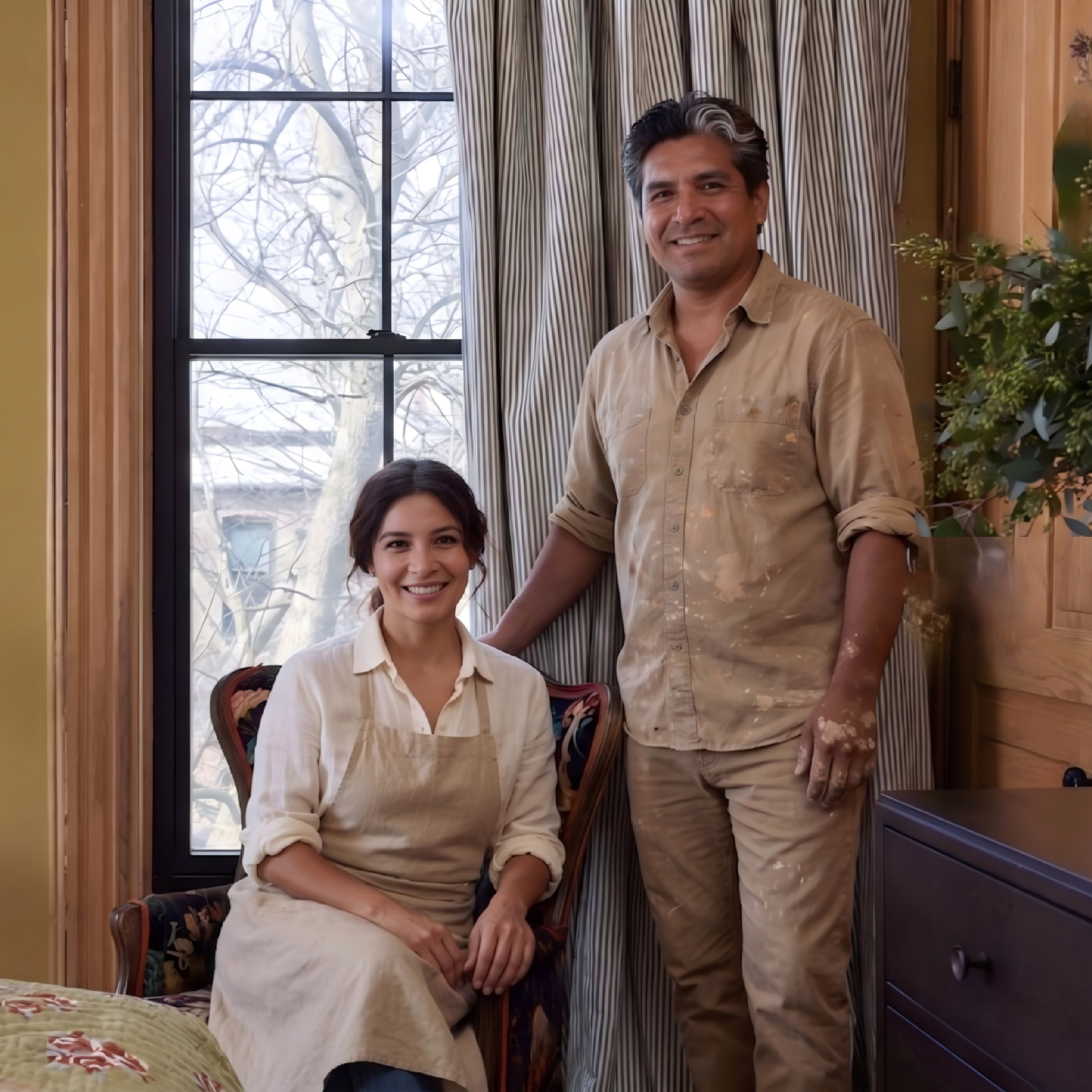
Elena Vargas spent twelve years repairing other people's textiles — Navajo blankets, colonial embroidery, ceremonial cloth — at the Museum of International Folk Art in Santa Fe. She was good at it. Then one afternoon, mending a frayed edge on a nineteenth-century blanket, she realized her stitching had become more compelling than the blanket itself. Not because the blanket had failed, but because the act of repair carries its own grammar — a rhythm of return, of staying with something that time has altered.
Tomás Vargas spent a decade making functional pottery — bowls, cups, vessels — in his garage, selling to Santa Fe galleries and using the rejects at home. He never chased control over his glazes; the kiln decided. Crackle, crawl, ash deposit — what potters call "faults," Tomás called the work.
They are married. They share a converted-garage studio. And since 2023, they share every canvas. Elena lays the ground — a rhythm of short parallel strokes like sashiko mending, terracotta dust and faded indigo, patches where the canvas breathes through. Tomás presses in — broad strokes of iron oxide and ash white dragged with full arm weight, cracking where the paint dries too fast, collapsing at the edges to reveal Elena's repair marks beneath. She builds the wound. He opens it wider. The painting is what's left.
Two makers. One canvas. No compromise.
Process
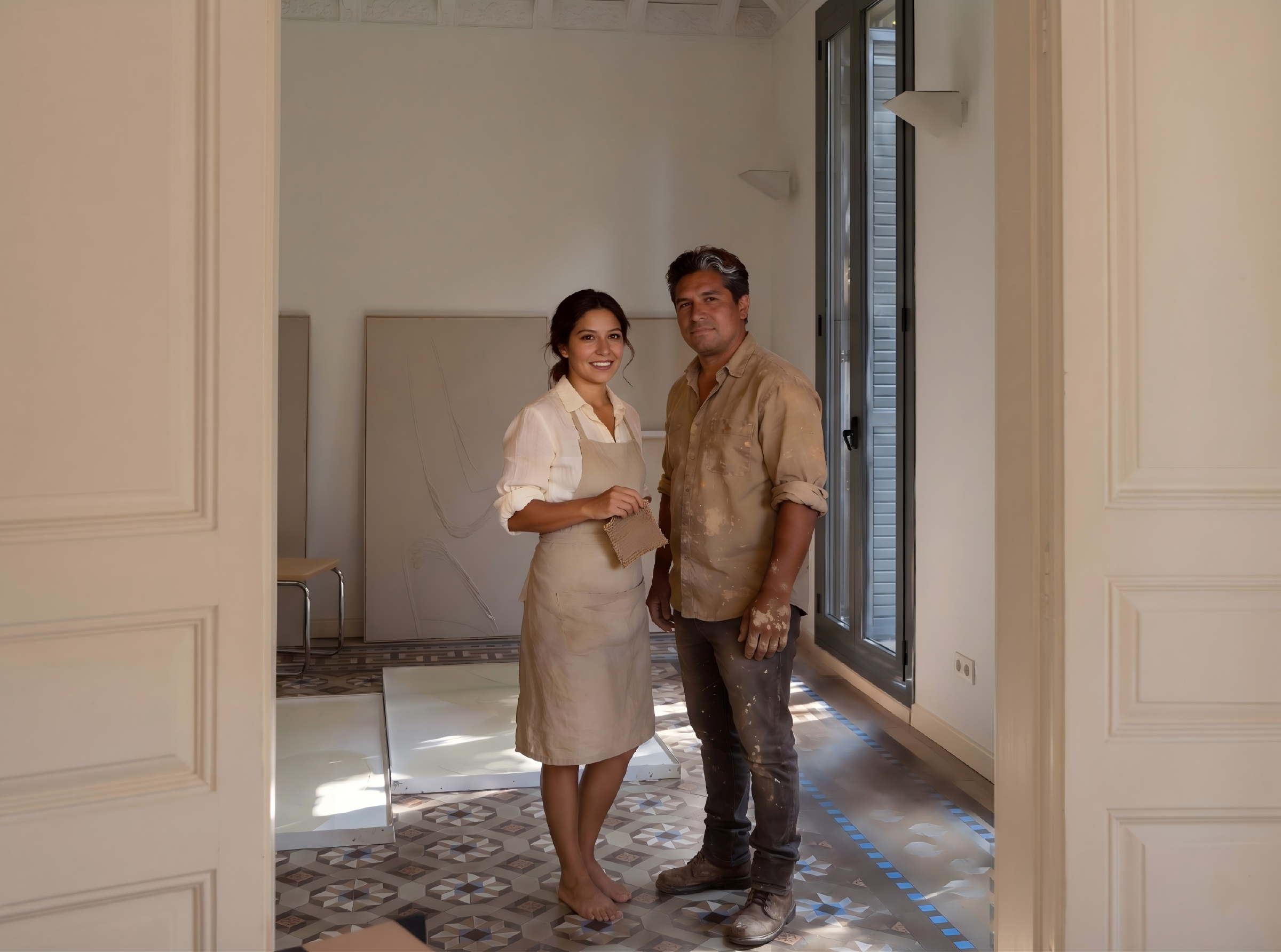
Every Vargas painting begins the same way: Elena alone with the canvas.She works like a conservator — slow, responsive, each mark answering the one before it. Short parallel strokes in terracotta dust and faded indigo slate, laid down in patches the way sashiko thread repairs worn cloth. She leaves gaps on purpose. Places where the raw canvas shows through. Edges that stop three-quarters of the way across. Not because she ran out of paint — because the repair knows when to stop.When her layer is half-dry, Tomás enters.He works like a kiln — fast, physical, irreversible. Broad strokes of iron oxide red and ash white, dragged with a wide metal knife, full arm weight pressing the paint into Elena's surface. The thick paint cracks where it dries too fast. Edges collapse under their own weight. And through every crack and collapse, Elena's mending rhythm shows through — not covered, not erased, but revealed by the breaking.The painting is finished when neither of them can add anything without taking something away from the other.
Studio Visit
Repair. Pressure. Crack.
Elena: Silence. I need to hear the brush.
Tomás: Lowrider oldies. The bass keeps me moving.
Tomás: A cracked mixing bowl. It's the reason I stopped making pots.
Elena: He's loud. Not with his voice — with his body. When Tomás presses into the canvas, the easel shakes. I can feel it from across the room. My layer is quiet. Then he comes in like a kiln firing.
Tomás: She leaves gaps for me. Not as a gift — as a provocation. "What are you going to do with this?" And I have to answer with the knife.
Never erase each other's marks. You can cover them. You can crack them open. But you don't paint over them to make them disappear. That's the difference between collaboration and compromise. Compromise makes things smaller. Collaboration leaves the evidence.


