
Stay Stitch
Tax included. Shipping calculated at checkout
Free Global Shipping · No Extra Tax

30-Day Return

Handmade

Sustainable Materials
About Stay Stitch
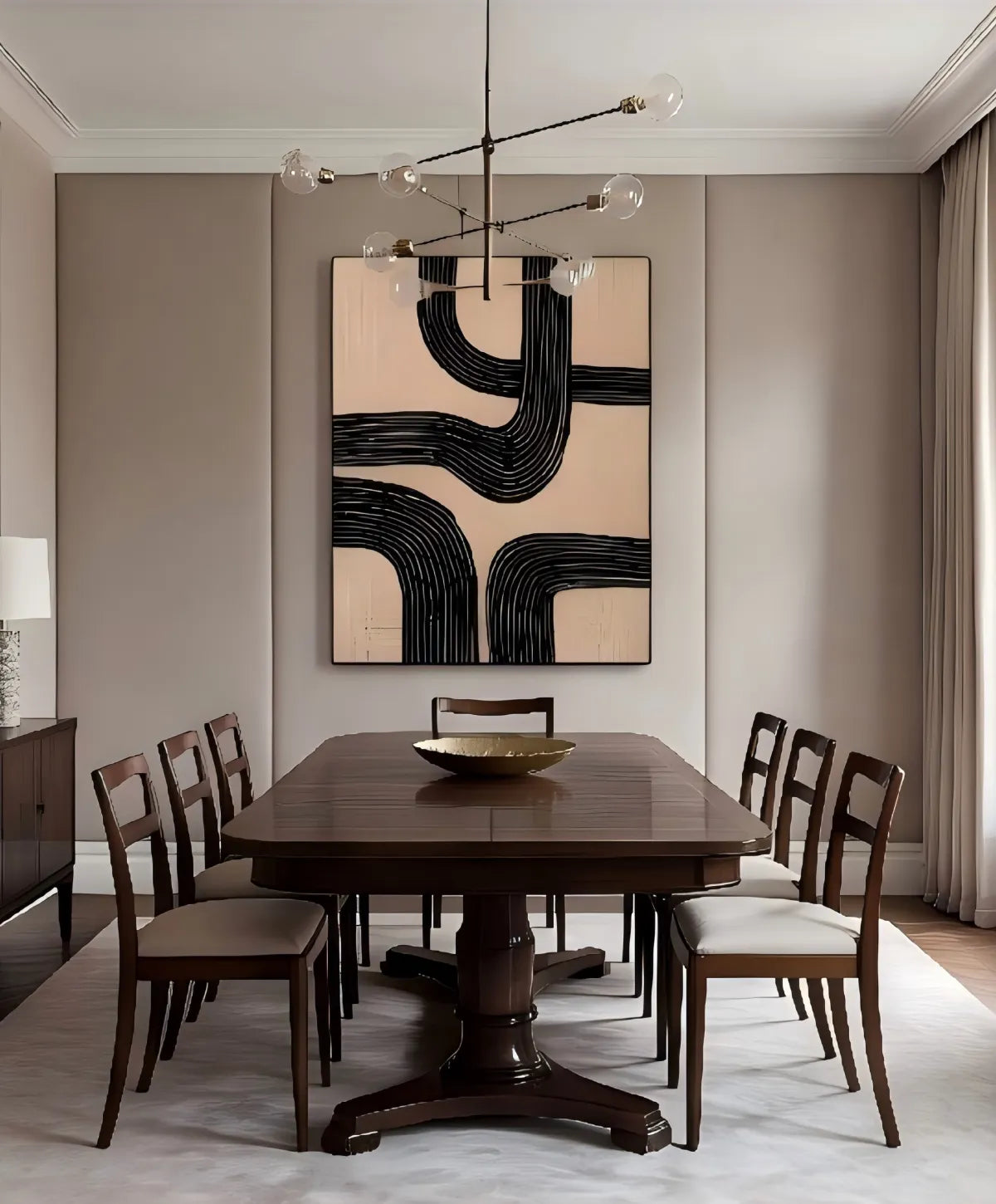
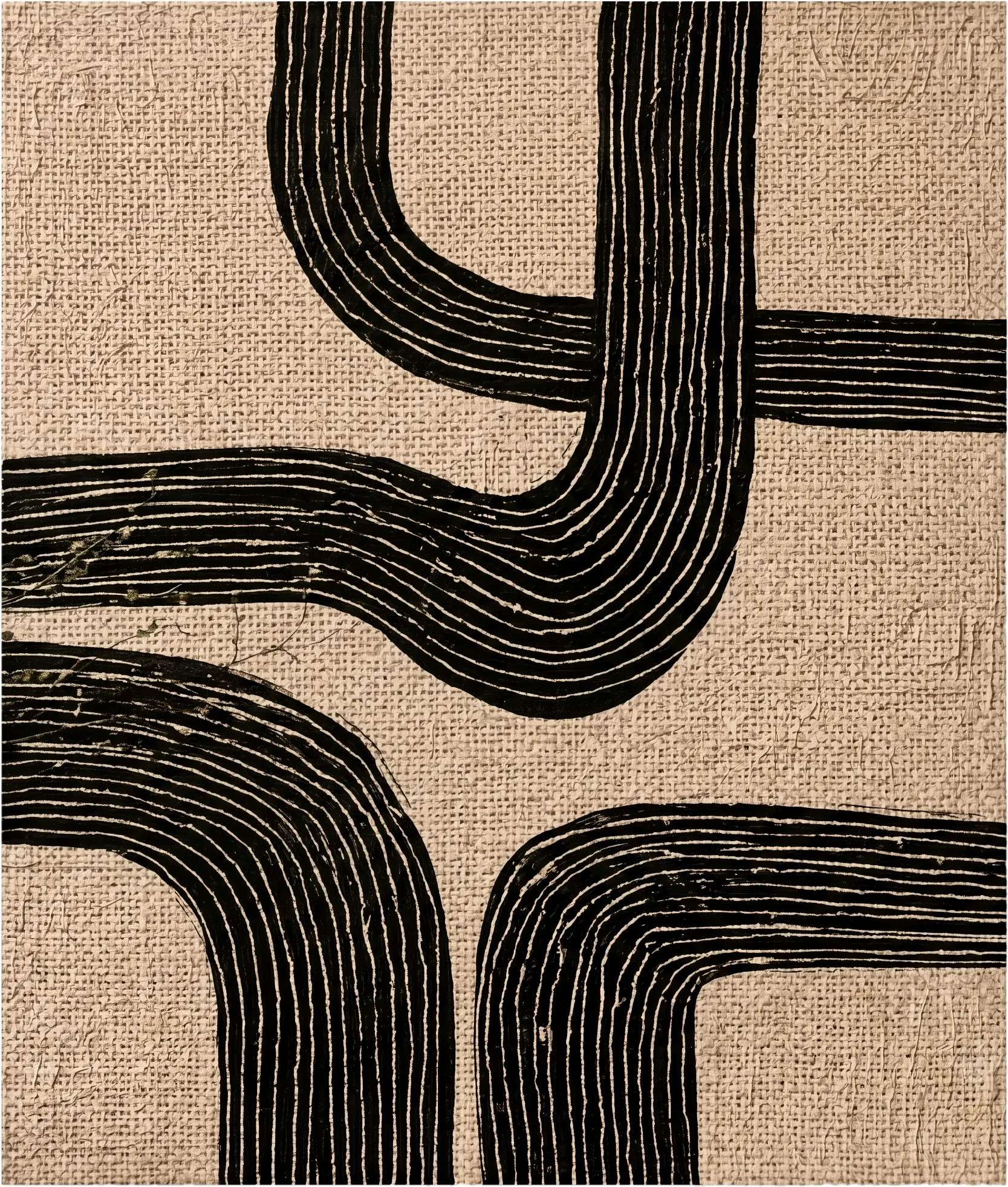
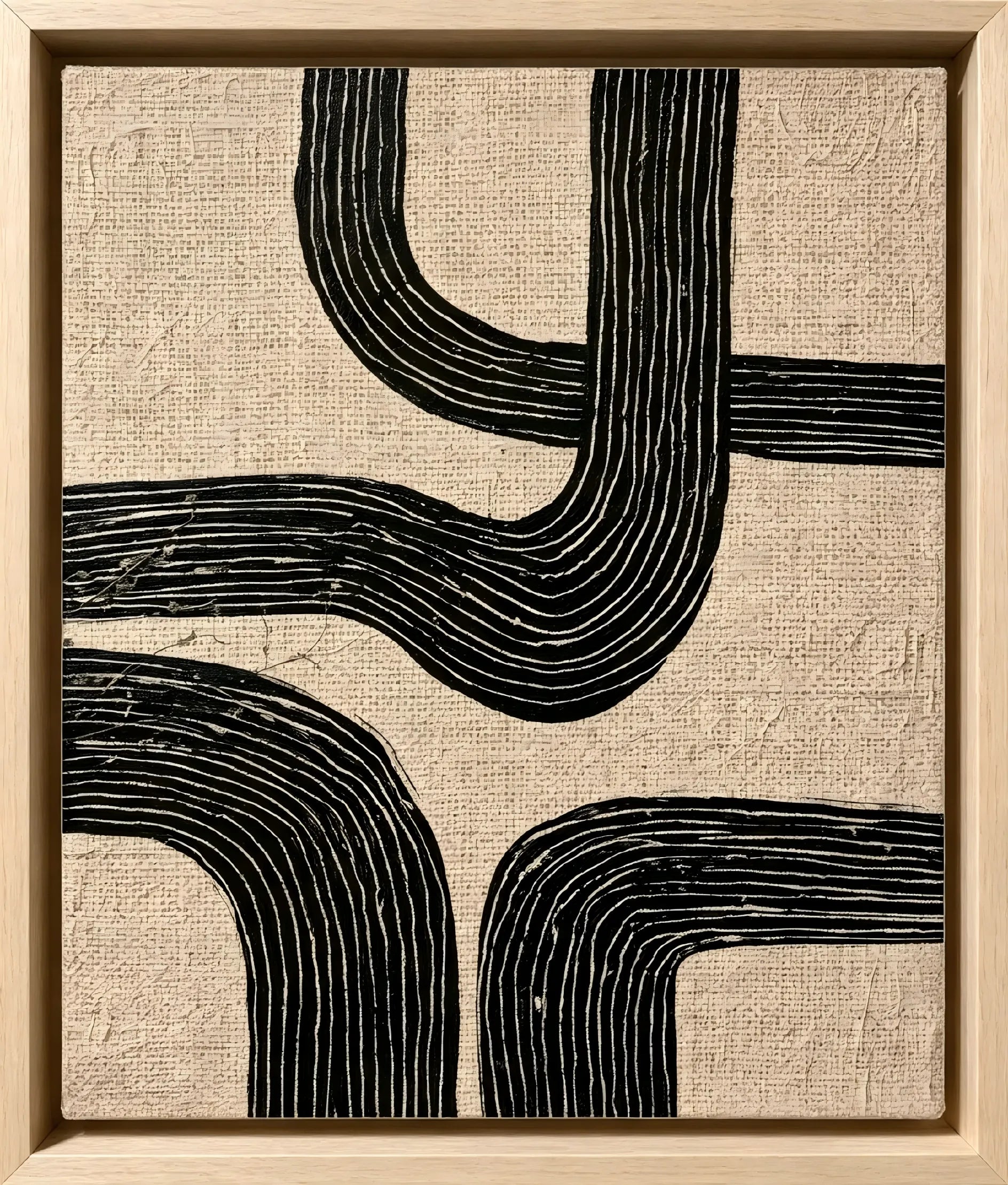
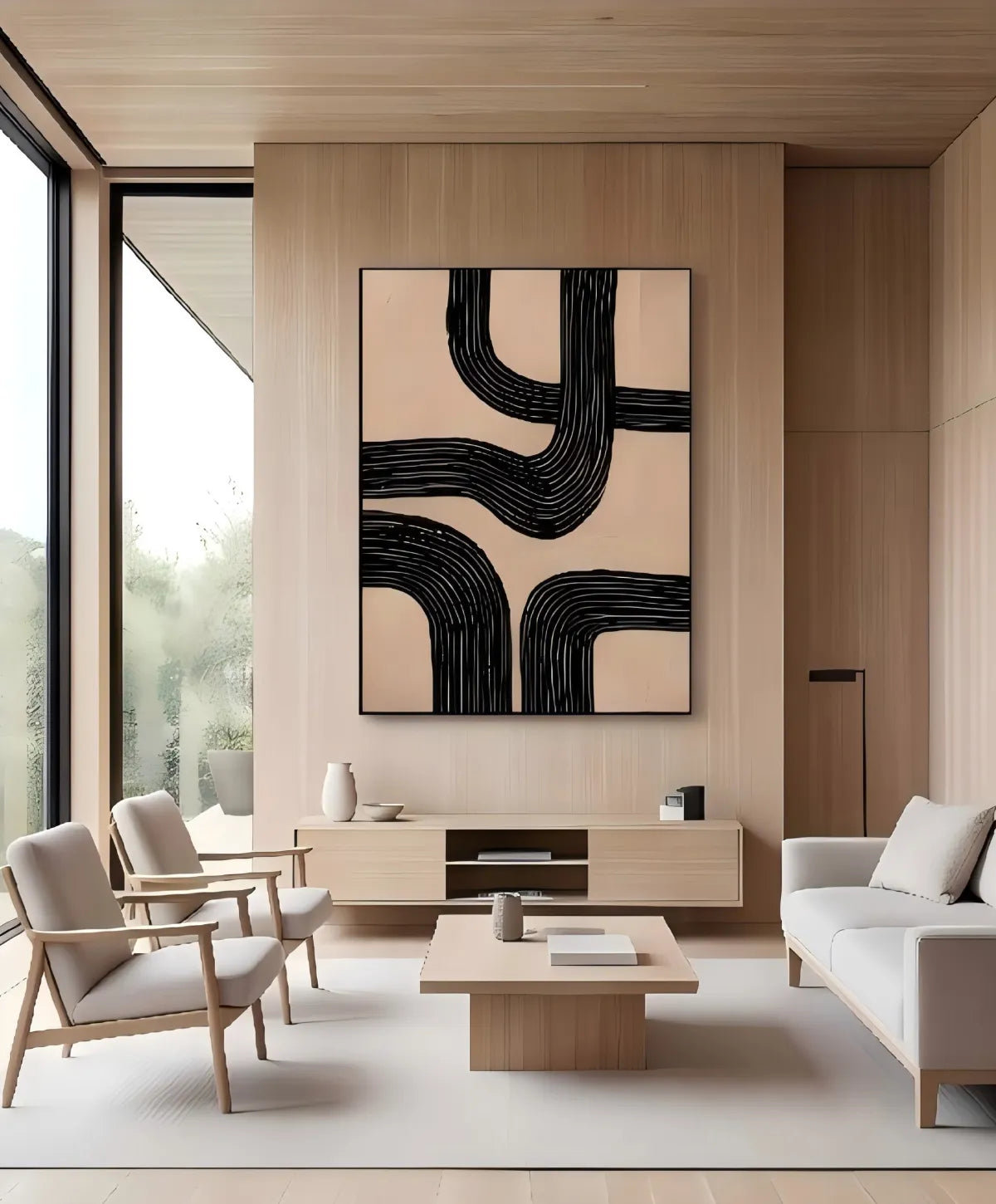
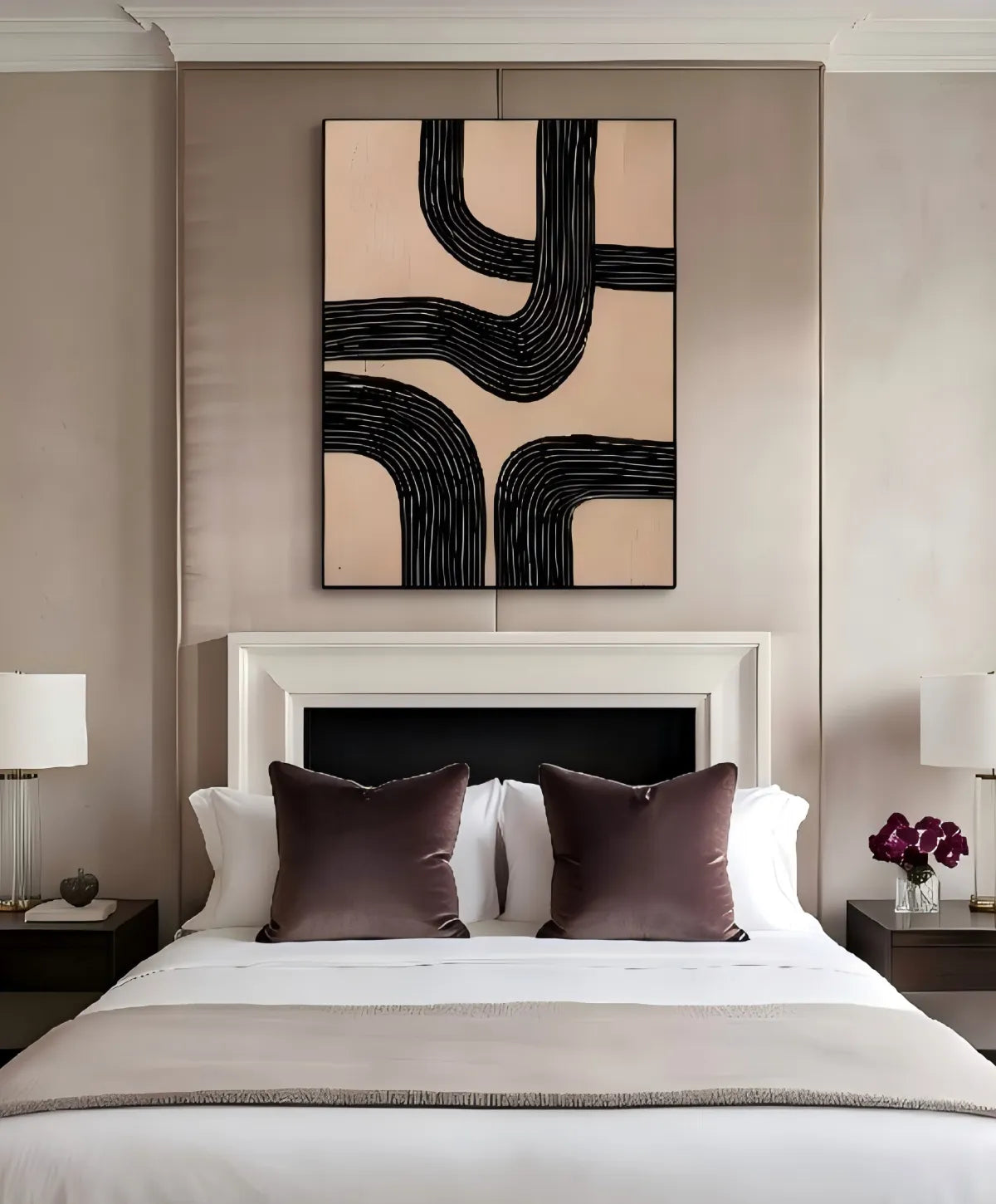
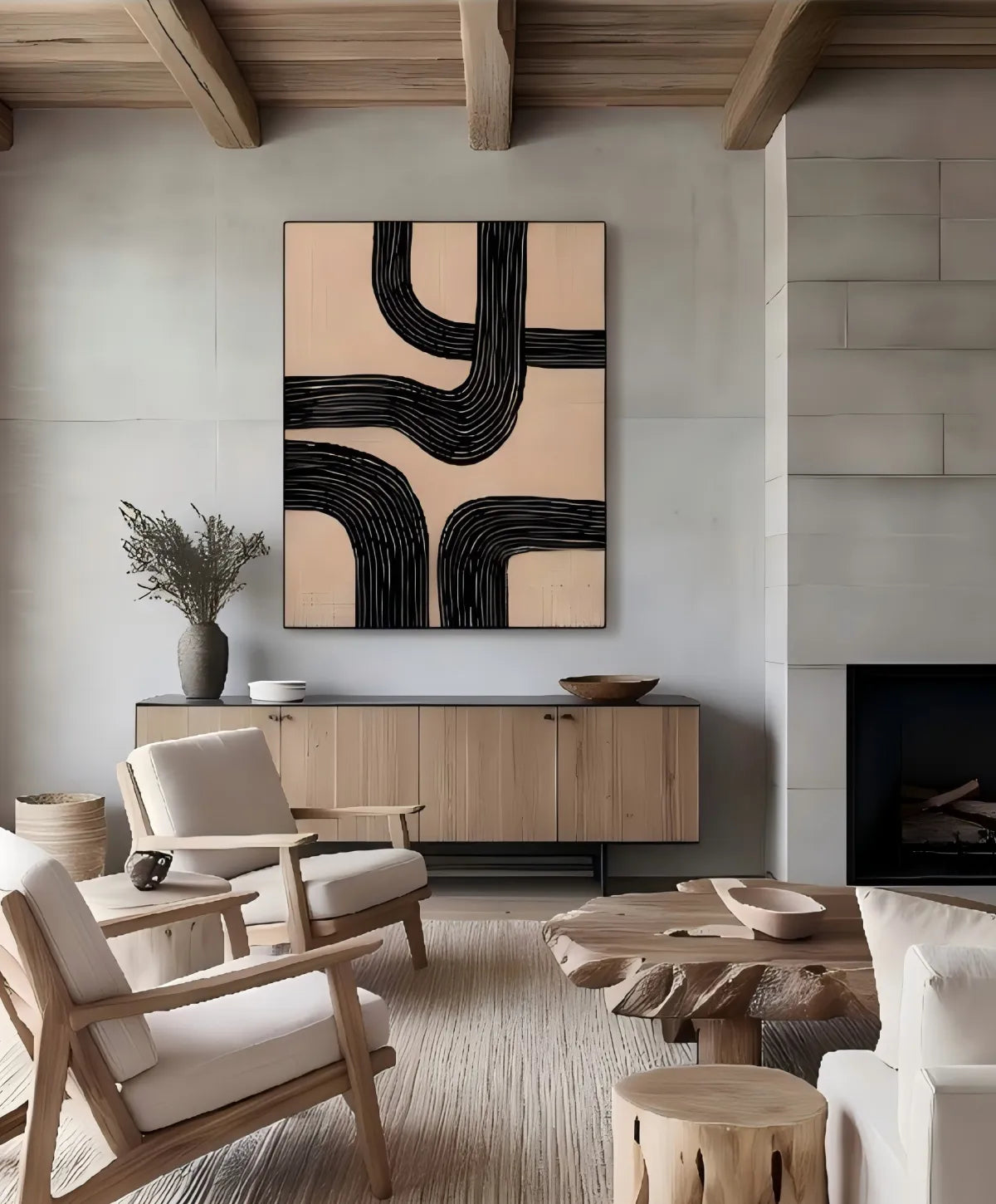
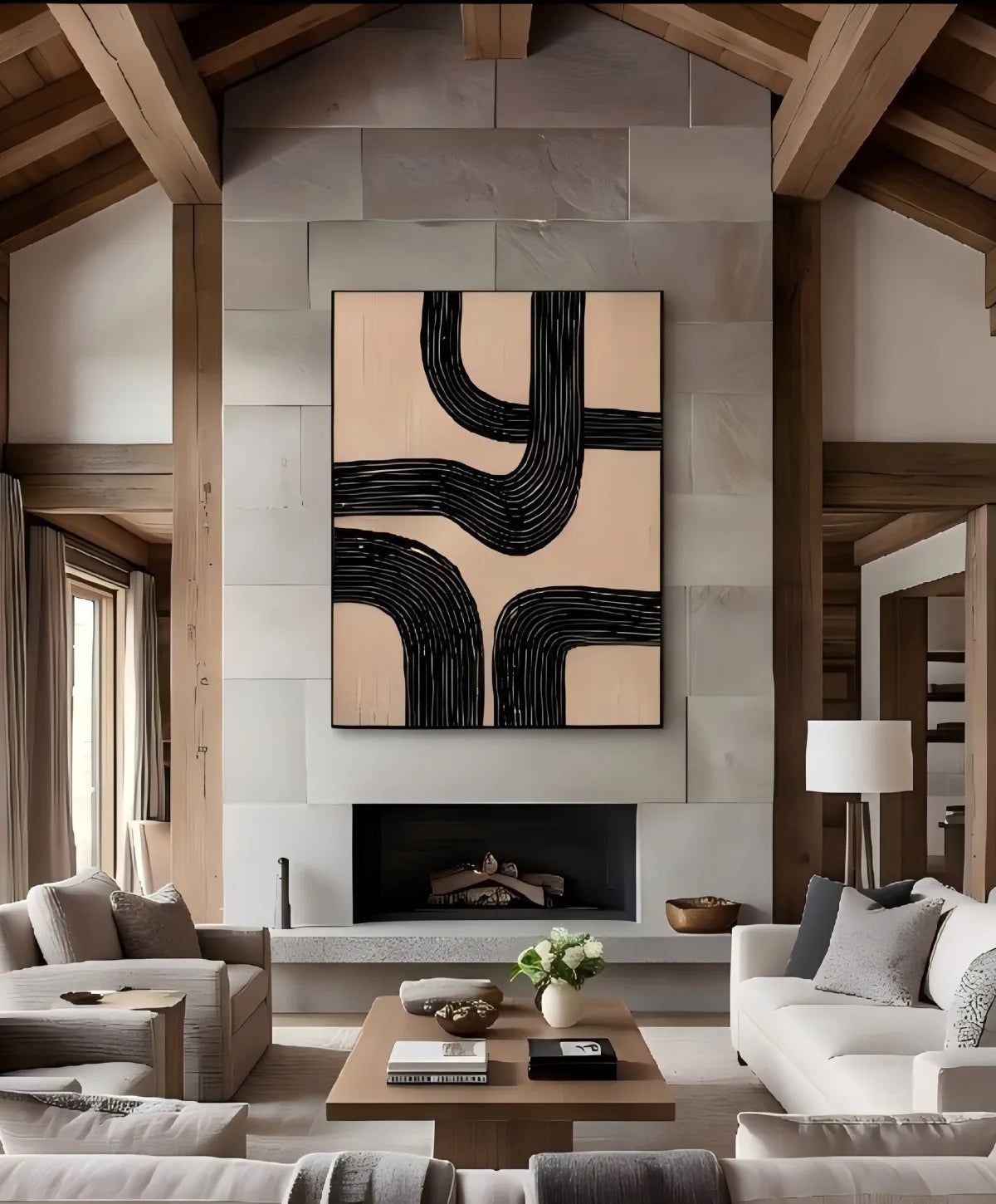
| I should tell you about the burlap first, because the burlap is the patient. Twelve years at the Museum of International Folk Art, I mended other people's textiles ― Navajo blankets, colonial embroidery, ceremonial cloth. Every piece that came across my table was already falling apart when it arrived. That's why they called me. And every time I opened a new folder and saw the damage, my first question was never "how do I fix this." It was always: "how much of this can I leave alone." Because over-repair is worse than no repair. A mender who doesn't know when to stop is not saving the object ― she's replacing it with something that looks like the object but isn't. The best repair is the one the fabric doesn't need to apologize for. This painting is three repairs on burlap. Not three decorations. Three repairs. Each black line is a sashiko run ― multiple parallel stitches moving together across the surface, turning where the damage turns, stopping where the damage stops. You can see the individual threads in each band because that's how sashiko works: the needle goes in, the needle comes out, the fabric breathes between each stitch. The white gaps between the black bands are the burlap showing through, the same way the original fabric shows through the stitching on a mended blanket. I didn't paint those gaps. I painted the stitches. The gaps are the fabric's own voice, saying: I'm still here underneath. The three lines don't connect. This is important. In traditional sashiko, the pattern is continuous ― one thread, one path, the repair travels across the whole surface without breaking. But I'm not mending a blanket anymore. I'm mending a surface that has three separate wounds, and each wound needs its own attention. The top line turns left, then right ― it's following a fracture that changes direction, the way a crack in old pottery will suddenly veer because it hit a pocket of air in the clay. The left line goes horizontal, then drops straight down ― that's a clean break, two edges pulling apart at a right angle, the easiest kind of damage to understand and the hardest kind to forgive. The bottom-right line mirrors it from the other side, like the fabric is being pulled in two directions at once and each side is calling for its own row of stitches. The gap between the top line and the left line ― the one that looks like a frame without a picture ― is the wound I didn't stitch. Not because I forgot. Because some gaps don't need closing. A textile conservator knows this: sometimes the hole in the fabric is the most honest part of the object. It's where the thread gave out, where the moths found their way in, where the light came through the weave for the first time. Mending that hole would be erasing the evidence that the fabric lived a life before I touched it. I stay-stitched around the wound. I stabilized the edges so the fabric won't unravel further. And then I stopped. Stopping is the hardest part of repair. Anybody can keep stitching. Knowing when the fabric has had enough ― that takes years. The green traces ― those aren't mine. That's Tomás. His hands were on this surface after mine, the way they always are, and his contribution is the one you almost miss: a faint celadon residue, like copper oxide flashing green in a reduction kiln, where the glaze reacts to the atmosphere and gives you a color you didn't ask for and can't repeat. He didn't paint the green. It deposited itself ― the way kiln ash settles on a pot that's been in the fire too long. His whisper is quieter here than in our other works. On some canvases, Tomás cracks my surface open and the whole painting shifts under his weight. Here, he just brushed past. A light touch. The way you'd test a wound to see if it's still tender. It is. It should be. That's how you know the repair was honest and not just cosmetic. I called this Stay Stitch because that's what the three lines are: stitches that hold the fabric in place so it doesn't distort any further. They're not decorative. They're not the main event. They're the quiet, functional, absolutely necessary work of keeping something from getting worse while you decide whether it needs to get better. I've been doing this work my whole adult life. I still don't know the difference between "worse" and "better" most days. But I know the difference between stitching and over-stitching. And I know that the gap I left ― the empty frame in the middle of all that black ― is the most important part of this painting. Not because of what's there. Because of what I chose to leave alone. |
The AevArt Bespoke Promise
No duplicates, no shortcuts. Every painting we create is a dedicated commission, meticulously hand-painted to align with your aesthetic. We take the time necessary to ensure that your the vision behind it.
Hand-Painted from Scratch: Every piece is created by hand from start to finish.
Artist Signature: You may request the artist's signature on the front (lower right corner) as a mark of authenticity.
Premium Materials: We use professional-grade oil and acrylic paints on heavyweight linen canvas.
As our artist works on your painting, you get front-row access:
Progress Updates: We send you photos and videos of your exact order during the process.
Shipping & Logistics
Timelines & Delivery
We handle the logistics so you can focus on the art. Our total delivery window is 10–16 business days.
Step 1 | Creation & Drying: 5–8 Business Days
Step 2 | Shipping & Transit: 5–8 Business Days
Estimated Total Delivery: 10–16 Business Days
Air Shipping: Delivered via FedEx, DHL, or USPS for a fast and reliable experience.
Sea Shipping: Expertly arranged for large-scale items to prioritize safety and efficiency.
Important: We cannot deliver to PO Boxes or Military addresses (APO/FPO/DPO). Please provide a physical street address to ensure successful delivery of your artwork.
Shipping Fee: Free Shipping to the United States on every order.
International Orders:The final settlement price includes full shipping costs.(costs.Calculated at checkout)
Customs Duties: Please note that once your order arrives in the country of destination, local guidelines apply and your order may be subject to import taxes and local duties. These taxes and duties are not included in your purchase price and are the responsibility of the customer. However, if applicable, we will support with any communication of information with customs as necessary.
Packaging: Rolled (Frameless): Shipped in a reinforced paper tube.
Gallery Framed: Encased in a solid wood frame and protected by a custom-built wooden crate.
Returns & Exchanges
30-Day Satisfaction Guarantee
"Love your art, or send it back within 30 days."
Returns Policy
You have 30 calendar days from the date you receive your artwork to request a return and get a FULL refund.
Standard Artworks: Eligible for the 30-day full Returns AND Exchanges policy.
Custom Orders: Fully personalized custom orders are non-refundable unless they arrive damaged during transit.
Damaged Art If your piece arrives damaged, email support@aevart.com with:Your Order Number Photos of the damaged art & packaging Solution: We provide Priority Repainting (5–8 business days) or a Full Refund.
Need help? Just contact us at support@aevart.com or log in to your account to get started.
Choose options

Free shipping within the US

30 Days Refund

Handmade

Eco Friendly
About Artist

Paint doing what I try to make clay do. Build up. Hold weight. Cast shadow
Tomás Vargas spent a decade making functional pottery — bowls, cups, vessels — in his garage, selling to Santa Fe galleries and using the rejects at home. He never chased control over his glazes; the kiln decided. Crackle, crawl, ash deposit — what potters call "faults," Tomás called the work.
They are married. They share a converted-garage studio. And since 2023, they share every canvas. Elena lays the ground — a rhythm of short parallel strokes like sashiko mending, terracotta dust and faded indigo, patches where the canvas breathes through. Tomás presses in — broad strokes of iron oxide and ash white dragged with full arm weight, cracking where the paint dries too fast, collapsing at the edges to reveal Elena's repair marks beneath. She builds the wound. He opens it wider. The painting is what's left.
Two makers. One canvas. No compromise.
Artist Recognition
Hand-Painted
No duplicates, no shortcuts. Every AevArt piece is a labor of love, guaranteed to be hand-painted from scratch: Every piece is created by hand from start to finish. No prints, no machines—just the rich texture and soulful essence of artisan craftsmanship.

Secure & Timely Shipping Assurance
We handle the logistics so you can focus on the art. Once your bespoke artwork is completed and stabilized (Step 1 | Creation & Drying: 5–8 Business Days), we partner with premium carriers including FedEx, DHL, or USPS for a fast and reliable experience.
Your masterpiece will arrive at your doorstep within 5–8 Business Days of dispatch (Step 2 | Shipping & Transit), ensuring a smooth, 10–16 Business Days total journey from our studio to your home.

Easy to hang
For all framed orders, your artwork arrives ready for immediate display.We pre-install professional hanging hardware to support both vertical and horizontal orientations. We also provide all necessary tools, allowing you to showcase your new piece with ease and absolute security.