
Lenore Ashby | Based Damariscotta, Maine
"The vessel is not the clay. The vessel is the silence the clay holds."
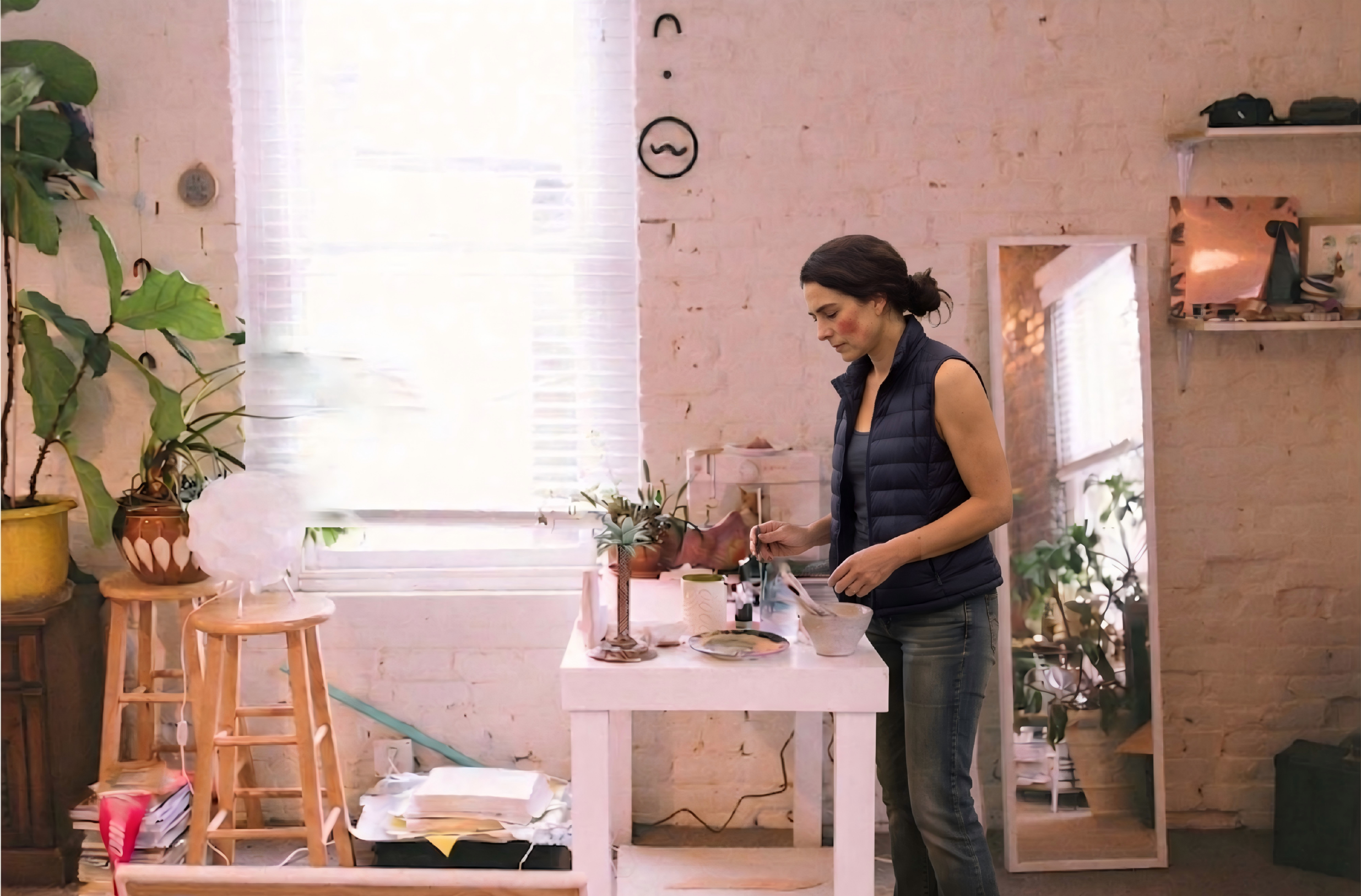
7-paragraph narrative arc: childhood of filling rooms with sound → rise as a Met mezzo-soprano → vocal cord polyps at 34, surgery, incomplete recovery → the moment onstage when she could hear the monitoring replacing the trust → leaving opera → moving to Maine, sitting in a converted barn for three months → discovering clay, recognizing the same principle (prepare, commit, release, listen) → building vessels from the inside out, the body remembering what the voice lost → wood-firing as the new performance → vessels that resonate in the wind, silence singing back
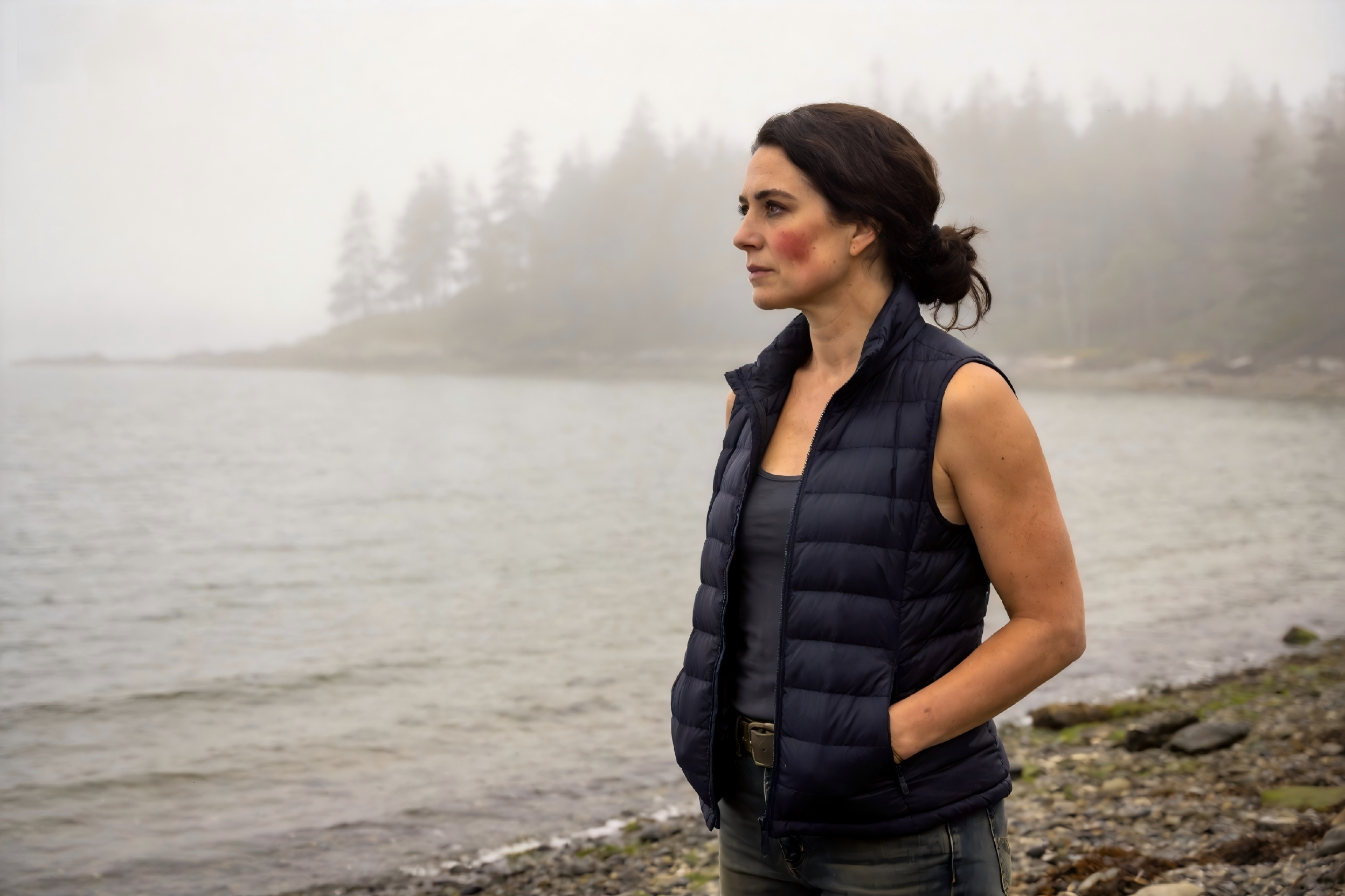
Process
5 paragraphs: building from the inside out (thumb + palm, expanding cavity like expanding the ribcage), the spiral rotation leaving visible undulations, slow drying (same patience as a fermata), bisque → minimal surface treatments (raw clay slip / wood ash / shino), loading the anagama, 40-60 hour firing with shifts, opening the kiln as performance
Studio Visit
Hold. Release. Listen.
Everything, if you're doing it right. Singing is not about producing sound. Singing is about containing breath and releasing it with intention. The sound is a byproduct. The real event is the relationship between the body and the air it holds. Pottery is the same thing. The vessel is not the clay. The vessel is the space inside the clay. I spent the first half of my life training my body to hold air and shape it into sound. Now I train clay to hold space and let silence live inside it. The body is different. The principle is identical.
A wheel makes a vessel by subtraction — you start with a lump and you remove clay from the inside until the wall is the right thickness. I make vessels by expansion. I press outward from the center, expanding the cavity, the way a singer expands the chest before a sustained note. The result is different. A wheel-thrown pot has a uniform wall because the tool imposes uniformity. My pots have walls that vary in thickness because my hands vary in pressure. The thin places are where I pressed harder. The thick places are where I held back. The pot records every decision I made while I was making it, including the ones I didn't know I was making. A wheel hides the body. I want the body visible.
Because control is not the same as quality. A gas kiln gives you the same result every time. That's useful if you're making dinner plates. I'm not making dinner plates. The wood kiln is a performance. I build the vessel, I load the kiln, I fire it for sixty hours — and then the flame does something I didn't expect. The ash lands where the draft carries it. The glaze runs where gravity pulls it. Some pieces come out with surfaces I could never have planned. Others come out quiet and I have to live with that. The uncertainty is not a problem. The uncertainty is the point. I spent the last year of my singing career trying to eliminate uncertainty from my voice, and it nearly killed me — not physically, but the part of me that made music. The wood kiln gives me back the thing I lost: the experience of committing fully to something and not knowing what will come out the other side. That's what performing used to feel like. Now the kiln is my stage.
Lao Tzu said: we shape clay into a pot, but it is the emptiness inside that holds whatever we want. He was right, and he wasn't being metaphorical. The function of a vessel is its void. A pot that is solid clay is a brick. The moment you hollow it out, it becomes a container — something that can hold water, grain, flowers, ashes, silence. I make the walls, but I'm building the emptiness. The emptiness is the work. I spent years filling rooms with sound. Now I build rooms for silence. Some of my vessels, when the wind moves through the studio, actually resonate — a low hum, the air column vibrating inside the form. I don't tune them for this. I don't engineer it. But it happens, and when it does, I hear something I haven't heard since I stopped singing. Not my voice. Something older. Something the vessel already knew how to do before I got there.
The surface is a record, not a canvas. It records my hands, the fire, the ash, the atmosphere in the kiln. If I painted a pattern on top of that, I'd be covering up the most honest part of the piece — the part that happened without my intention. The ash glaze that forms in the wood kiln is not decoration. It's the fire's signature. The areas where the shino blushes orange are not a design choice. They're where the carbon trapped in reduction. These surfaces tell the truth about what happened to this piece of clay during the forty hours it spent inside a kiln at twenty-three hundred degrees. Why would I paint over the truth?
When the space inside it feels right. I can't explain this any better than a singer can explain why a phrase ends where it does. You feel the shape of the silence. You feel when the vessel is holding enough and not too much. A vessel that's too small feels cramped — the space inside it is tight, anxious. A vessel that's too large feels empty — the space is cavernous, lonely. The right size feels like a breath held at the top of the lungs, just before the note begins. Full. Ready. Suspended.
No. I think of them as a continuation. The voice was the instrument. The breath was the method. The silence was always there — in the rests, in the pauses between phrases, in the space between the singer and the audience where the music actually lives. I spent twenty years filling that silence with sound. Now I build containers for it. The silence hasn't changed. I just stopped trying to fill it and started trying to hold it. The vessels are not a replacement for singing. They're what singing was always pointing toward.


