

Type Relic
Tax included. Shipping calculated at checkout
Free Global Shipping · No Extra Tax

30-Day Return

Handmade

Sustainable Materials
About Type Relic
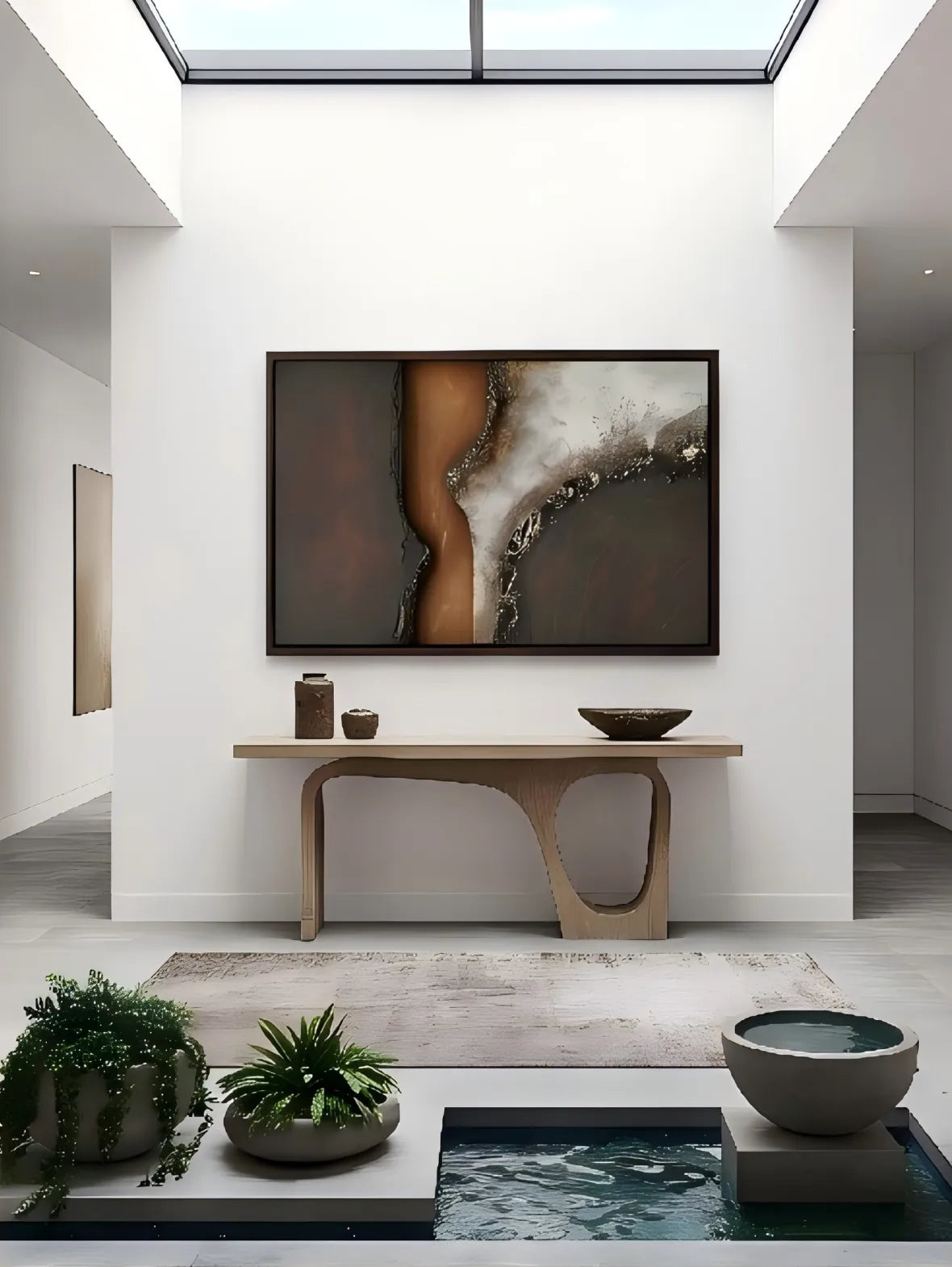
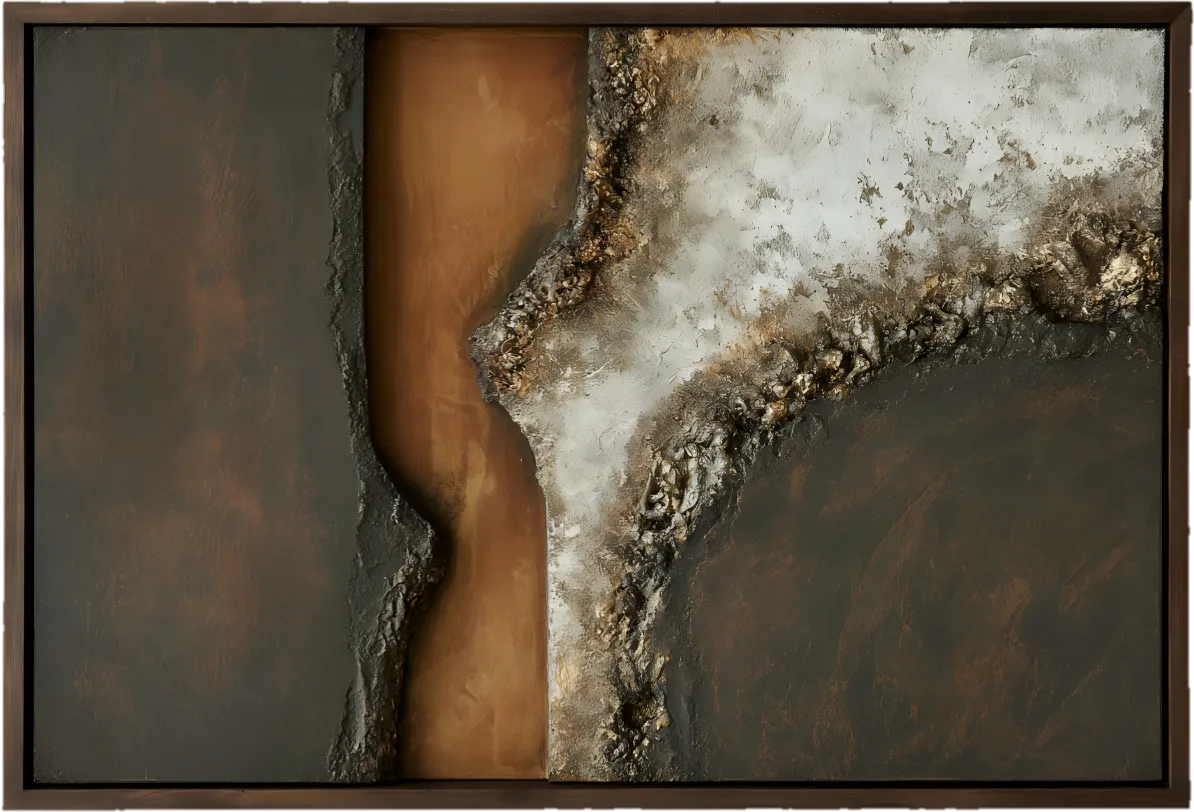
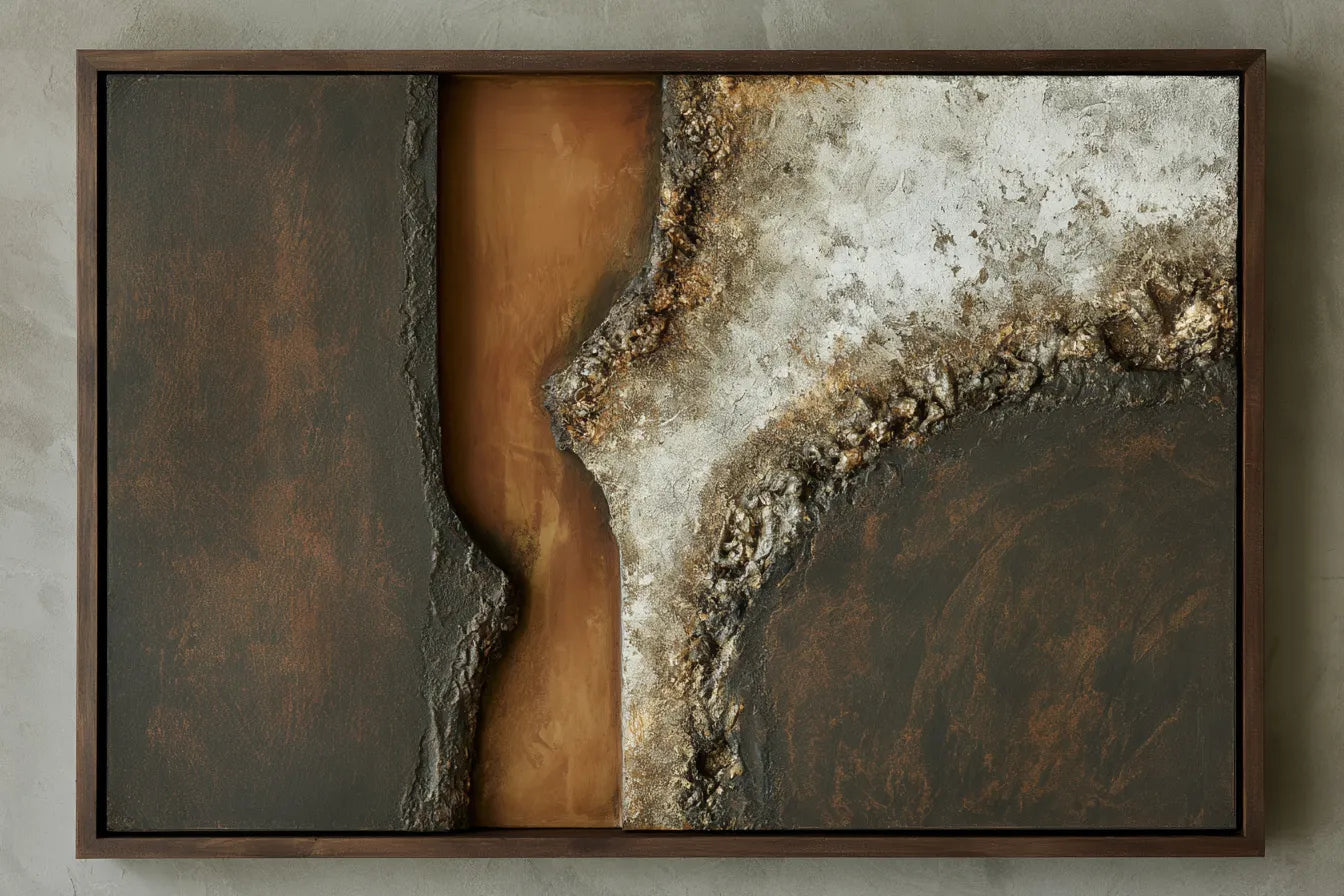
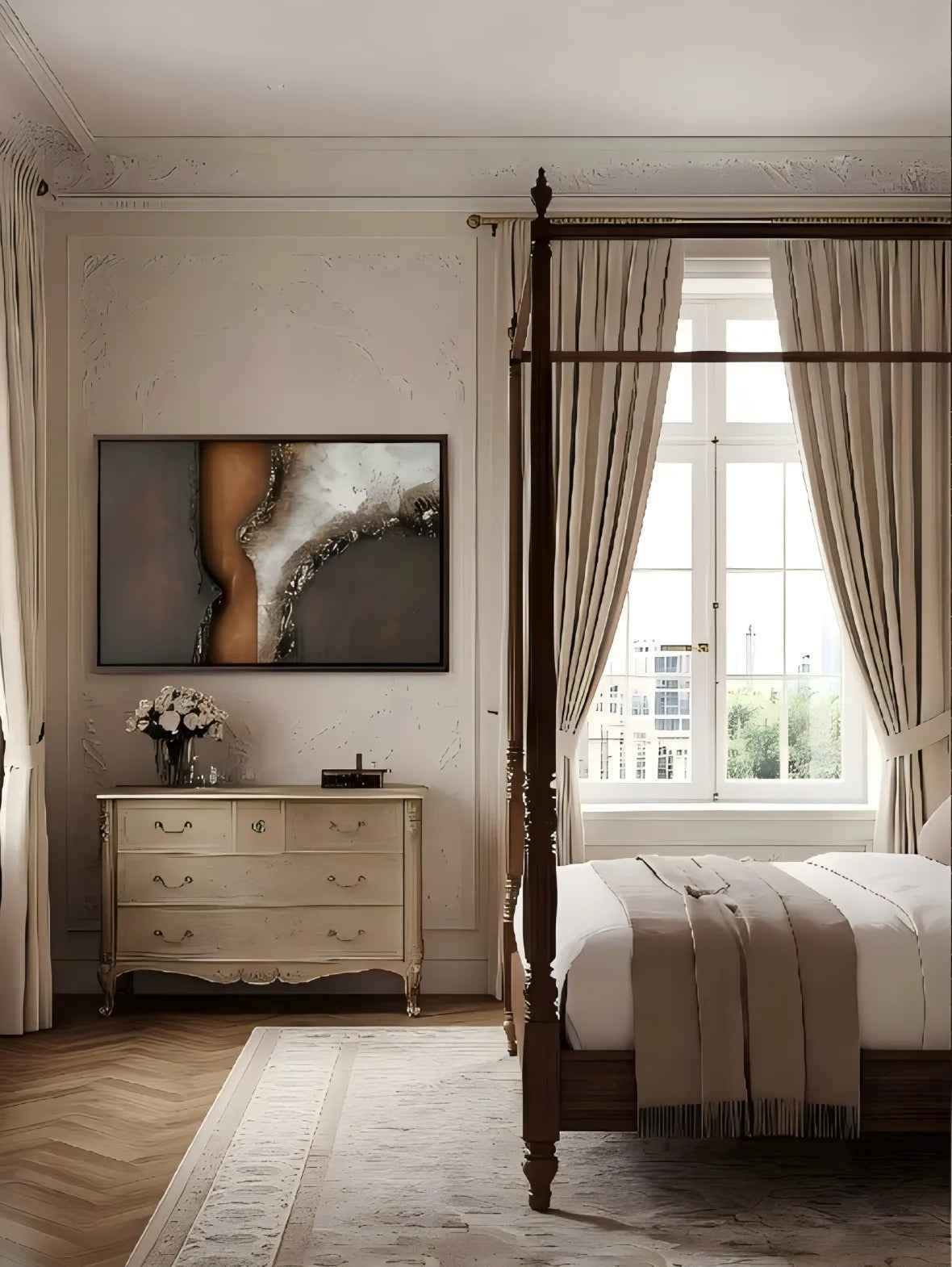
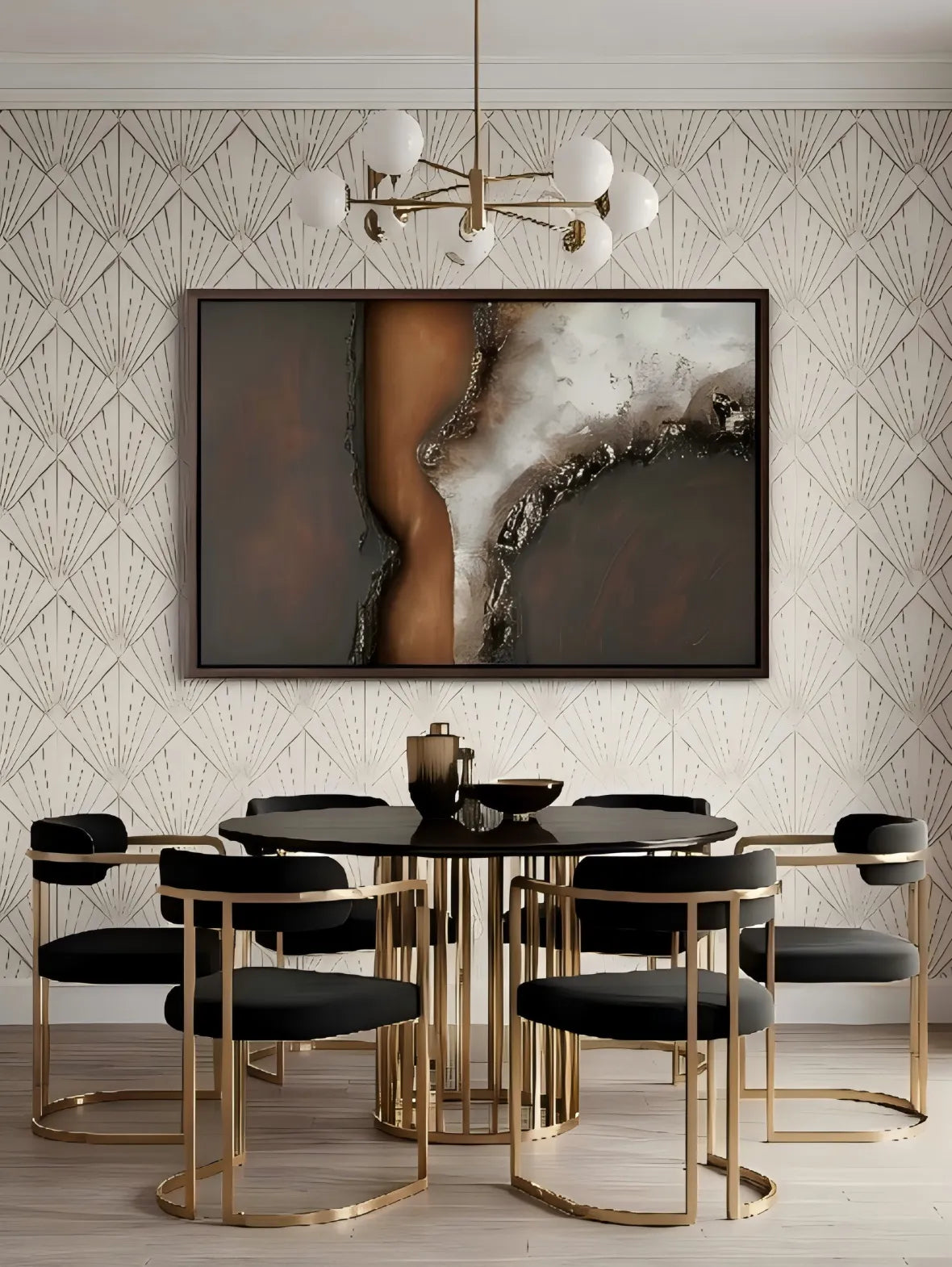
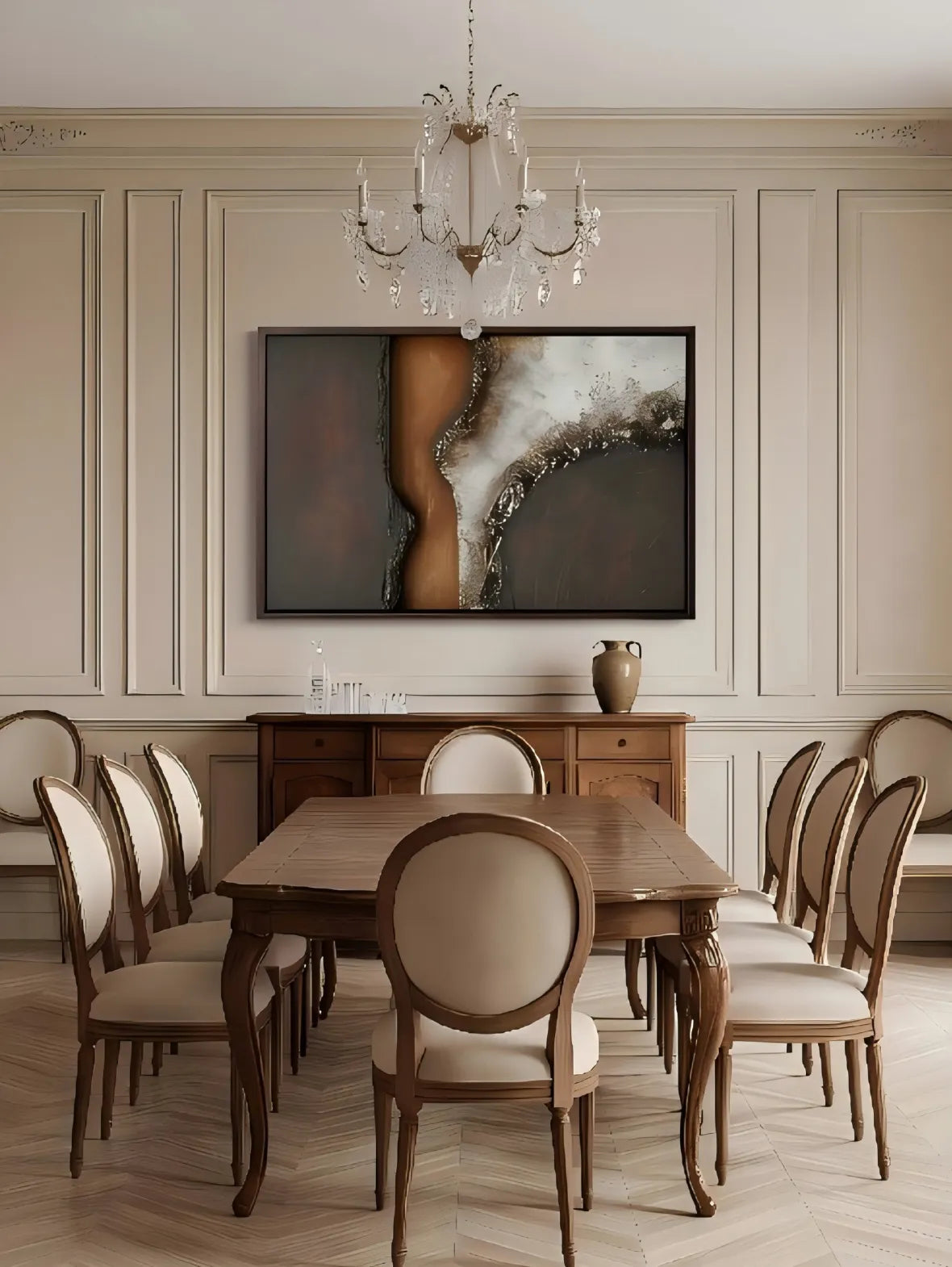
| The face wasn't painted. It was left behind. I need you to understand the difference, because the difference is the whole painting. A painted face is an intention ― someone decided where the forehead ends and the nose begins, chose the angle of the jaw, placed the chin at a specific height because that's where a chin belongs. This face decided nothing. It occurred. It is the shape that two surfaces made when they met and neither one was willing to give way entirely, and the line of their meeting ― the fault line, the contact boundary ― happens to describe a profile. Not because anyone drew it. Because the physics of two materials pressing against each other at that angle produced a contour that your brain recognizes as a face. Your brain is doing the work. The painting is just sitting there, being what it is: an accident of contact that looks like a portrait. I know something about accidental portraits. Fifteen years running a Heidelberg Windmill in Brooklyn, I printed millions of impressions ― lead type meeting paper under two tons of pressure, ink transferring from the raised surface of the letter to the receptive surface of the sheet. That's the intended impression: the text, the image, the thing the client ordered. But the press also makes a second impression. The back of the sheet receives a ghost ― a faint, reversed, inkless depression where the type pressed into the paper without meaning to be seen. Printers call it strike-through. It's a defect. You're supposed to add more packing to the tympan to eliminate it. I spent years eliminating it. Then one afternoon I looked at a proof sheet I was about to discard, and I saw the ghost on the back more clearly than the text on the front. The text was what the client wanted. The ghost was what actually happened. The text was the intention. The ghost was the evidence. I stopped trying to eliminate the ghost and started listening to it. This painting is a ghost. The three vertical panels are three witnesses to the same event. The left panel is the wall before ― dense, dark, undisturbed. Its surface carries only the fine brush marks of its making, the way a clean sheet of paper carries only the texture of the mill. Nothing has happened here yet. The wall is still keeping its composure, still pretending it has always been this way, still hiding whatever is underneath. The center panel is the erosion. Something pressed through from behind ― heat, moisture, pressure, some force I introduced and then got out of the way of ― and the surface gave way in the middle, collapsing inward like a mine shaft. The vertical striations are the direction of that collapse: whatever came through came from top to bottom, pressing downward through the wax, leaving a channel. The edges are irregular because the wax didn't yield evenly ― it resisted in some places and surrendered in others, the way a wall doesn't fall in a straight line but crumbles at its weak points first. The smooth surface inside the depression is where the heat re-melted the wax and it settled flat, the way a wound scars over smooth when the tissue regenerates. The erosion isn't damage. It's testimony. It says: something passed through here. And the right panel is the burn. That's where the heat was applied directly ― not to create a texture, but to make the surface receptive. When you heat encaustic wax with a torch, the surface doesn't just warm. It liquefies. The solid becomes fluid, the flat becomes volatile, and anything embedded in the wax ― pigment particles, fiber fragments, air bubbles ― rises to the surface and re-orients itself according to forces it was previously trapped against. The crust that formed when the wax cooled again is not the same surface that was there before the torch passed. It is a new surface: rough, blistered, carrying the mineral signature of the heat that made it. The dark brown and black areas are where the wax carbonized ― the bee propolis and damar resin cooking past their tolerance, leaving char. The amber glow is where the wax survived the heat but was permanently darkened, the way amber deepens when you hold it to a flame. And at the boundary between the burn and the erosion ― that's where the face is. The left edge of the burned zone and the right edge of the collapsed center meet at a contour. Not a drawn contour. Not a carved contour. A boundary contour ― the line where two different conditions of the same surface share an edge. The forehead is where the burn pushed upward. The nose is where the erosion pushed inward. The chin is where the two forces balanced for a moment and the surface held. It's a profile the way a footprint is a shoe: the shape of something that pressed against the surface and then withdrew, leaving only the memory of the contact. I didn't sculpt that face. I didn't plan it. I introduced heat to the right panel and let the wax decide what to do with it. I introduced pressure to the center panel and let the surface decide how to yield. I did nothing to the left panel and let it stand as the control ― the before-state, the witness that can testify that the wall was once whole. The face is what happened when heat met resistance and resistance met surrender and the boundary between them happened to describe a shape your primate brain recognizes as one of its own. That's the ghost. That's the strike-through. The text on the front of the proof sheet says: this is a painting about three panels and some textures. The ghost on the back says: a face was here. Not because anyone drew it. Because two surfaces met, and the meeting left a trace, and the trace has a shape, and the shape has a name, and the name is you. |
The AevArt Bespoke Promise
No duplicates, no shortcuts. Every painting we create is a dedicated commission, meticulously hand-painted to align with your aesthetic. We take the time necessary to ensure that your the vision behind it.
Hand-Painted from Scratch: Every piece is created by hand from start to finish.
Artist Signature: You may request the artist's signature on the front (lower right corner) as a mark of authenticity.
Premium Materials: We use professional-grade oil and acrylic paints on heavyweight linen canvas.
As our artist works on your painting, you get front-row access:
Progress Updates: We send you photos and videos of your exact order during the process.
Shipping & Logistics
Timelines & Delivery
We handle the logistics so you can focus on the art. Our total delivery window is 10–16 business days.
Step 1 | Creation & Drying: 5–8 Business Days
Step 2 | Shipping & Transit: 5–8 Business Days
Estimated Total Delivery: 10–16 Business Days
Air Shipping: Delivered via FedEx, DHL, or USPS for a fast and reliable experience.
Sea Shipping: Expertly arranged for large-scale items to prioritize safety and efficiency.
Important: We cannot deliver to PO Boxes or Military addresses (APO/FPO/DPO). Please provide a physical street address to ensure successful delivery of your artwork.
Shipping Fee: Free Shipping to the United States on every order.
International Orders:The final settlement price includes full shipping costs.(costs.Calculated at checkout)
Customs Duties: Please note that once your order arrives in the country of destination, local guidelines apply and your order may be subject to import taxes and local duties. These taxes and duties are not included in your purchase price and are the responsibility of the customer. However, if applicable, we will support with any communication of information with customs as necessary.
Packaging: Rolled (Frameless): Shipped in a reinforced paper tube.
Gallery Framed: Encased in a solid wood frame and protected by a custom-built wooden crate.
Returns & Exchanges
30-Day Satisfaction Guarantee
"Love your art, or send it back within 30 days."
Returns Policy
You have 30 calendar days from the date you receive your artwork to request a return and get a FULL refund.
Standard Artworks: Eligible for the 30-day full Returns AND Exchanges policy.
Custom Orders: Fully personalized custom orders are non-refundable unless they arrive damaged during transit.
Damaged Art If your piece arrives damaged, email support@aevart.com with:Your Order Number Photos of the damaged art & packaging Solution: We provide Priority Repainting (5–8 business days) or a Full Refund.
Need help? Just contact us at support@aevart.com or log in to your account to get started.
Choose options

Free shipping within the US

30 Days Refund

Handmade

Eco Friendly
About Artist

"The groove wasn't carved by the stone. It was carved by the stone's refusal to stop moving."
Artist Recognition
Hand-Painted
No duplicates, no shortcuts. Every AevArt piece is a labor of love, guaranteed to be hand-painted from scratch: Every piece is created by hand from start to finish. No prints, no machines—just the rich texture and soulful essence of artisan craftsmanship.

Secure & Timely Shipping Assurance
We handle the logistics so you can focus on the art. Once your bespoke artwork is completed and stabilized (Step 1 | Creation & Drying: 5–8 Business Days), we partner with premium carriers including FedEx, DHL, or USPS for a fast and reliable experience.
Your masterpiece will arrive at your doorstep within 5–8 Business Days of dispatch (Step 2 | Shipping & Transit), ensuring a smooth, 10–16 Business Days total journey from our studio to your home.

Easy to hang
For all framed orders, your artwork arrives ready for immediate display.We pre-install professional hanging hardware to support both vertical and horizontal orientations. We also provide all necessary tools, allowing you to showcase your new piece with ease and absolute security.